Why Your Trash Cans Smell (and Why the Hose Doesn't Fix It)
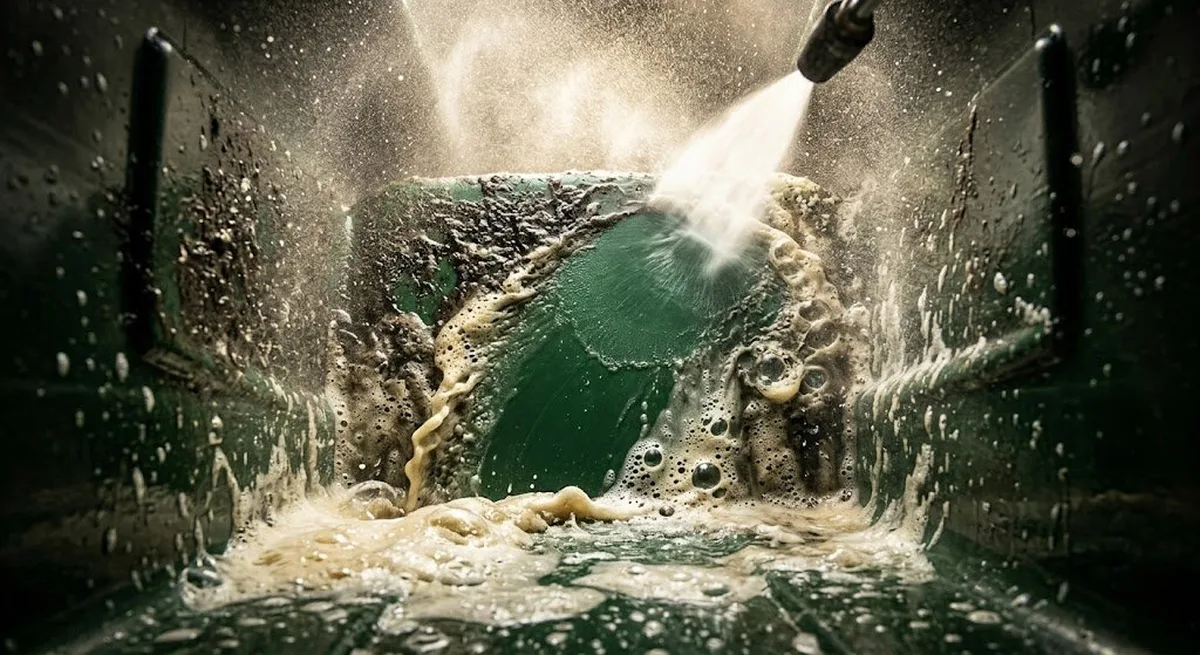
Every trash bin in New Jersey goes through the same lifecycle: fine for a year, then one July day you crack the lid and it hits you. Here's what's actually happening in there — and why the garden hose hasn't been working.
The smell is a biofilm, not a mess
Trash bags leak. Juice from meat trays, diaper residue, week-old food liquid — it pools at the bottom of the bin and bakes against hot plastic. Within days it forms a biofilm: a layer of bacteria physically bonded to the surface. That's why the smell survives rinsing — you're not smelling dirt, you're smelling a living colony, and water alone doesn't evict it.
Then come the flies
Flies can smell that biofilm from remarkable distances, and a bin is a perfect nursery: warm, wet, food-adjacent, undisturbed for a week at a time. Eggs become maggots in about a day in summer heat. If you've ever opened a bin to a writhing bottom, you know — and once it's happened, the residue that attracted them is still there after you've hosed it out.
Why DIY fails (or costs more than it looks)
Doing it properly yourself means hot water, degreaser, a long brush, gloves, and twenty minutes per bin on a driveway — and the runoff carries bacteria-laden water straight down the driveway into the storm drain, which is both illegal in NJ and headed for the nearest creek. Most people do it once, hate it, and never do it again. That's the honest origin story of this entire industry.
What actually fixes it
High-pressure washing physically strips the biofilm, a sanitizing treatment kills what's left, and a deodorizing finish keeps it pleasant between cleans — with every drop of wash water captured and disposed at an approved facility instead of your street. Done monthly, the colony never re-establishes; the bin just stays a bin instead of becoming an ecosystem.
The NJ calendar
Smell season runs Memorial Day to Labor Day — heat is the accelerant. The smart move is starting service in late spring so the biofilm is gone before July does its thing. The second-best time is right now, whatever the month, because the colony only grows.
Bins in Jackson or Howell? Routes are enrolling — flat published pricing, never billed until your first clean.
See Pricing →